CRM for Sports Teams: Manage Fans, Players, Sponsors & Operations
- A CRM for sports teams brings fan, player, sponsor, and operational information into one system.
- Teams can use CRM data to manage communication, renewals, sponsorships, events, and follow-ups.
- The right CRM should match the way your club or organization actually works.
- Custom fields, automation, reporting, and integrations can help different departments stay organized.
- A sports CRM can start with a few important workflows and grow as your organization grows.
A CRM for sports teams, also known as sports CRM software or a sports CRM platform, helps clubs and sports organizations manage relationships with fans, players, sponsors, members, partners, and staff. It brings important information, communication, follow-ups, events, and commercial relationships into one organized system.
Instead of switching between spreadsheets, inboxes, and separate tools, teams can use sports CRM software to create a clearer view of the people and relationships that keep the organization running.
According to ZoFlowX's experience, the most useful CRM setup is not the one with the most features. It is the one that helps staff manage the information and follow-ups they deal with every day.
What Is Sports CRM Software for Teams and Clubs?
Sports CRM software is customer relationship management software adapted to the needs of a sports organization, sports team, or sports club.
It can help manage several types of relationships, including:
- Fans and supporters
- Members and season-ticket holders
- Players and athletes
- Coaches and staff
- Sponsors and commercial partners
- Event attendees
- Volunteers and community contacts
The goal is not simply to store contact information.
A good sports CRM connects those records with communication, activities, renewals, sponsorships, partnerships, events, and other day-to-day processes.
Why Do Sports Teams and Clubs Need CRM Software?
Sports teams and clubs often manage several groups of people at the same time.
A marketing team may focus on fans and campaigns. Operations may coordinate events. Commercial teams may manage sponsors. Coaches and staff may need access to selected player information.
Problems can appear when this information is spread across different spreadsheets and tools.
For example:
- A sponsor renewal date may be missed.
- A fan may receive the wrong campaign.
- Staff may not know the latest communication with a partner.
- Event follow-ups may be forgotten.
- Different departments may maintain different versions of the same contact information.
A sports CRM creates a central record that authorized team members can use.
How Can Sports CRM Software Help Teams Manage Fans?
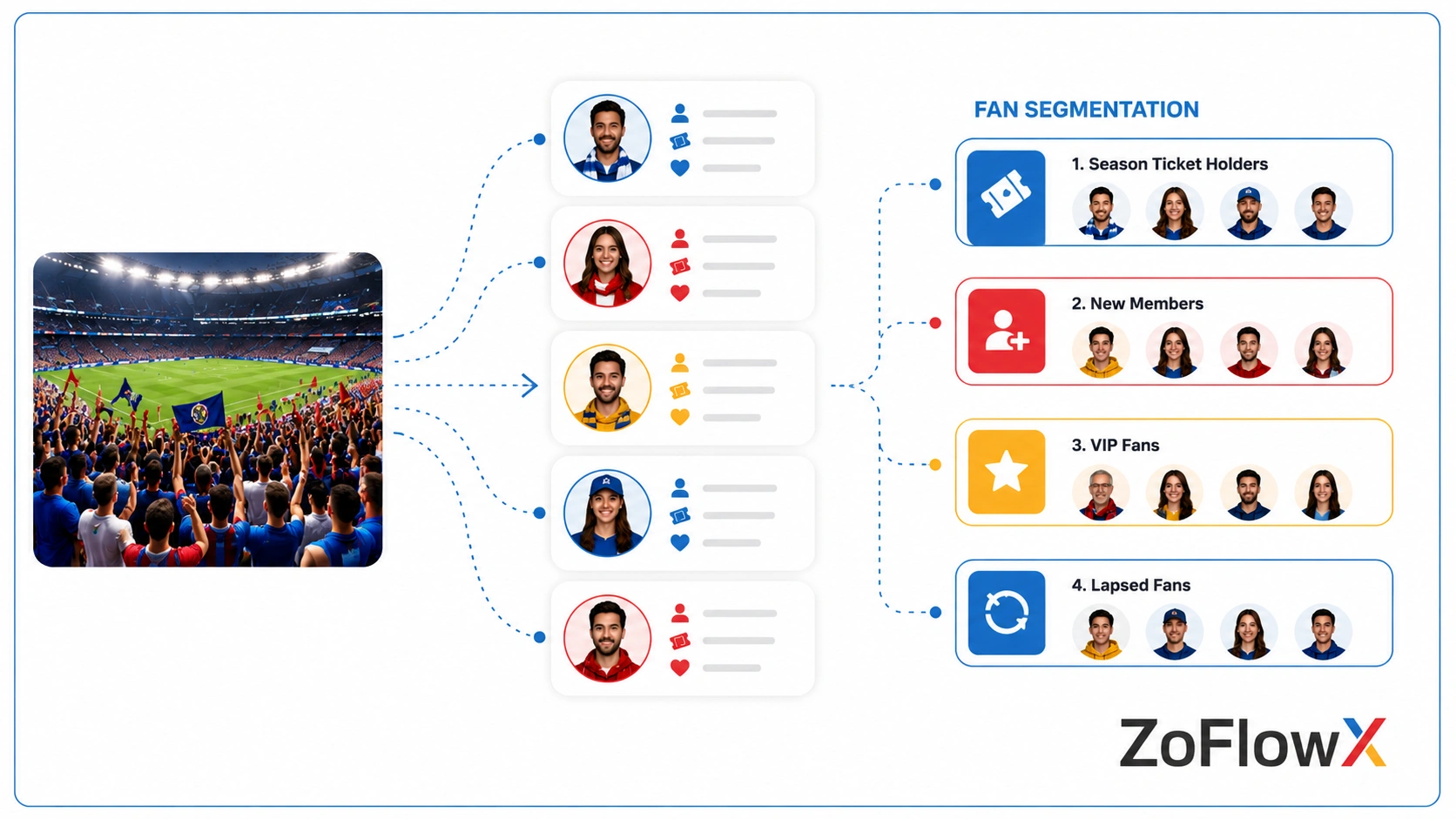
Fan relationships are often one of the largest areas of activity for a sports team or sports club.
A CRM can create a profile for each fan or supporter and organize information such as:
- Contact details
- Membership status
- Ticket history
- Event attendance
- Communication history
- Interests and preferences
- Campaign engagement
This information can then help teams group their audience.
For example, you might create separate groups for:
- Season-ticket holders
- New members
- Occasional attendees
- Lapsed members
- Fans interested in specific events
This makes sports CRM marketing and communication more relevant than sending the same message to everyone.
How Can Sports CRM Help Retain Fans and Members?
A CRM can help teams identify important dates and engagement changes.
For example, workflows can remind staff when memberships are due for renewal or when a supporter has not responded to recent communication.
The CRM can then support actions such as:
- Renewal reminders
- Membership follow-ups
- Event invitations
- Feedback requests
- Re-engagement campaigns
The goal is not to automate every interaction. It is to reduce the number of important follow-ups that are forgotten through well-planned CRM automation workflows.
How Can a Player CRM Help Manage Players, Coaches, and Staff?
Sports organizations also need an organized way to manage player, coach, and staff information, which is where a player CRM can be useful. A player CRM or connected system can help authorized teams keep important records, communication, tasks, and deadlines in one place.
These records may include:
- Contact information
- Contract dates
- Communication history
- Availability
- Assigned tasks
- Operational notes
- Important deadlines
Sensitive information should only be stored and accessed according to the organization's privacy, security, and applicable data requirements.
The main benefit is better coordination.
Instead of asking several people for the latest information, authorized staff can work from the same current record.
Can Sports CRM Software Help Manage Sponsors and Partnerships?
Yes. Sports CRM software can be particularly useful for managing sponsorships, partnerships, and other commercial relationships.
Each sponsor or partner can have a dedicated record showing:
- Main contacts
- Partnership stage
- Deal value
- Contract period
- Renewal date
- Deliverables
- Communication history
- Next actions
A sponsorship CRM pipeline can also help commercial teams see where each sponsorship opportunity stands.
For example:
Potential sponsor → Initial discussion → Proposal → Negotiation → Active partnership → Renewal
This gives teams a clearer view of current opportunities and upcoming renewals.
It can also help teams track sports partnership deliverables, renewal dates, and reporting requirements in the same place. This is especially useful when several sponsors have different commitments and staff need a clear view of what has been promised, completed, or still requires follow-up through a sponsorship CRM.
For commercial teams that also need to track new sponsorship opportunities from the first conversation through follow-up, the same CRM structure can support CRM for generating and managing leads.
Why Is Sponsor Renewal Tracking Important?
A partnership may involve several conversations and commitments throughout the year.
If important dates are stored only in individual calendars or inboxes, there is a greater risk of missed follow-ups.
Sports CRM software can create reminders and tasks before important sponsor renewal dates arrive.
This gives the team time to review the relationship instead of reacting after the contract has already expired.
How Can Sports Event CRM Software Support Sports Events?
Sports event CRM software can help organize the people, communication, registrations, and follow-ups connected to events. Events often bring together fans, sponsors, partners, staff, and volunteers, so keeping this information connected can make coordination easier.
You may need to manage:
- Invitations
- Registrations
- Attendees
- Sponsors
- Partners
- Volunteers
- Follow-up communication
A CRM can connect these activities to existing contact records.
For example, after an event, your team can see who attended, who did not attend, and which people may need a follow-up.
This can help with future sports event planning, communication, and follow-up.
Can Sports CRM Improve Team Communication and Marketing?
Yes. One of the biggest benefits of sports CRM software is that it keeps communication history connected to the right person or organization.
When a staff member speaks with a sponsor or sends an important message, that activity can be recorded in the relevant profile.
This can reduce situations where: "I thought someone else had already contacted them."
Different teams can see the latest activity, depending on their access permissions. Automated tasks can also remind staff when follow-up is required.
What Features Should Sports CRM Software Have?
The right sports CRM features depend on the type and size of your organization.
However, most sports organizations should consider the following:
You do not necessarily need every sports CRM feature on day one. Start with the processes causing the biggest problems.
How to Choose the Best Sports CRM Software for Your Team or Club
Before choosing sports CRM software, first identify what you need to manage.
Ask questions such as:
- Who are the main groups of people we need to track?
- What information do we currently keep in spreadsheets?
- Which follow-ups are often missed?
- What systems do we already use?
- Do we need custom records?
- Do different departments need different access?
- What reports would help management make decisions?
The answers will help determine whether you need a simple sports CRM or a more customized CRM setup.
According to ZoFlowX's experience, choosing software before understanding the workflow can lead to unnecessary customization later.
How Can Zoho CRM Work as Sports CRM Software?
Zoho CRM can be configured as sports CRM software to manage different types of contacts and relationships.
For a sports organization, this could include custom records for:
- Sponsors
- Members
- Players
- Academy contacts
- Partners
- Event participants
Sports teams can also create CRM workflows for reminders, follow-ups, renewals, and internal tasks.
Zoho CRM may also connect with other tools when the organization needs additional capabilities for marketing, reporting, finance, or other processes.
The important step is mapping the real workflow first. Setting up a CRM for your organization should begin with the processes your staff already follow, rather than forcing the organization to change everything to fit the software.
How Can Football and Soccer Clubs Use a CRM System?
Football and soccer clubs can use a football CRM system to manage different groups connected to the club.
For example:
- Season-ticket holders
- Members
- Academy contacts
- Sponsors
- Community partners
- Matchday attendees
A football club CRM can help organize communication and follow-ups across the season.
For clubs with membership or ticket renewal processes, automated reminders can also help staff manage important dates.
The system does not need to be limited to football. The same structure can be adapted for other sports based on the organization's workflow.
How Much Does Sports CRM Software Cost?
The total cost of sports CRM software depends on the system you choose and how much customization is required.
The main cost factors usually include:
- Number of users
- CRM edition
- Required features
- Custom modules
- Workflow automation
- Integrations
- Data migration
- Reporting
- Implementation and support
A small club may begin with a simple setup focused on contacts and follow-ups.
A larger organization may require sponsor pipelines, fan segmentation, integrations, dashboards, and workflows across multiple departments.
For this reason, it is better to define the required processes before estimating the full project cost.
When Should Sports Teams Consider CRM Implementation?
You may be able to set up a simple CRM yourself.
However, sports CRM implementation support may be useful when your organization needs:
- Complex customization
- Multiple workflows
- Data migration
- Integration with other systems
- Custom reports
- Different access rules for different teams
Sports CRM implementation support can help turn business processes into a structured CRM system.
If your team is still deciding how the system should be structured before implementation begins, Zoho CRM consulting support can help you identify the workflows, records, and requirements that should be planned first.
The goal should be to create something your staff can actually use, not simply add more features.
Conclusion
A CRM for sports teams can help bring fans, players, sponsors, events, and internal operations into a more organized system.
The biggest benefit comes from understanding which relationships and processes need attention first. You do not need to automate everything at once.
According to ZoFlowX's experience, a sports CRM works best when it is built around the real tasks your staff already handle every day.
If you are considering a CRM for your club or sports organization, ZoFlowX can help you plan and configure a system around your workflow. Call +91 8190009222 or email info@zoflowx.com to discuss your requirements.
A well-planned CRM can give your team less manual chasing and a clearer view of the relationships that matter.
Ready to Stop Managing Sports Relationships Across Spreadsheets?
See how a CRM could be structured around your fans, players, sponsors, and daily operations.
GET YOUR SPORTS CRM PLANFrequently Asked Questions
What Is Sports CRM Software?
Sports CRM software is designed to help sports teams, clubs, and organizations manage relationships with fans, members, players, sponsors, partners, and staff. It keeps contact information, communication history, tasks, and important activities organized in one system.
Can Sports CRM Software Help Manage Fans?
Yes. A CRM can store fan information, segment audiences, track communication, and support follow-ups. Teams can use this information to send more relevant messages and manage memberships, events, and other relationships.
Can Sports CRM Software Manage Sponsorships?
Yes. Sports CRM software can track sponsor contacts, opportunities, contract dates, deliverables, communication, and renewal activities. A sponsorship pipeline can also help commercial teams understand the status of each partnership.
Can a Player CRM Help Manage Players and Staff?
A CRM or connected system can help organize selected player and staff records, communication, tasks, and important dates. Access to sensitive information should be controlled according to the organization's privacy and security requirements.
What Features Should Sports CRM Software Include?
Useful features can include contact management, segmentation, custom records, workflow automation, task management, reporting, and integrations. The right combination depends on what the sports organization needs to manage.
Can Football and Soccer Clubs Use a CRM System?
Yes. Football and soccer clubs can use CRM software to manage members, season-ticket holders, sponsors, academy contacts, matchday communication, and other club relationships.
How Much Does Sports CRM Software Cost?
The cost depends on the CRM edition, number of users, customization, integrations, migration requirements, and implementation support. A simple setup may require fewer resources than a multi-department system with custom workflows and reporting.